
Joining the usual tourism-related opportunities, such as hotel and bar work, owning a gift shop or a supermarket, transport is a thriving business opportunity for the budding entrepreneur in Bulgaria. Sunny Beach boasts a plethora of ways to see the sites, from private taxi firms calling at you on street corners and at bus stops, e-scooter hire, to water taxis and the thriving Land Train shuttles that drive tourists from one end of the strip to the other.
A short walk along the beach front brings you to the Land Train Stop, where I embark and head into “Sunny Beach Central”. I ride along the beach front shoreline to our destination of “The Bridge”. From here I board a water taxi, taking the twenty-minute journey across the Black Sea to the Old Town portion of the nearby ancient city of Nesebar.
Often referred to as the “Pearl of the Black Sea”, this rich city-museum has been shaped and defined by more than three millennia of ever-changing history. The small city exists in two parts separated by a narrow human-made isthmus, with an ancient part located on the peninsula, and the more modern section on the mainland side, covered with modern hotels, bars and restaurants. Archaeological exploration of the area has found traces of 44 churches, built between the 5th and 19th century. Like a movie scene, as we approach the entire coastline seems to radiate a heavenly glow. As we sail closer to the docks, realisation strikes. This is no halo of reverie, the glistening ring surrounding the city is a loop of coaches and taxis encircling the coast, reflections of sunlight off windows, not an evangelical glow.
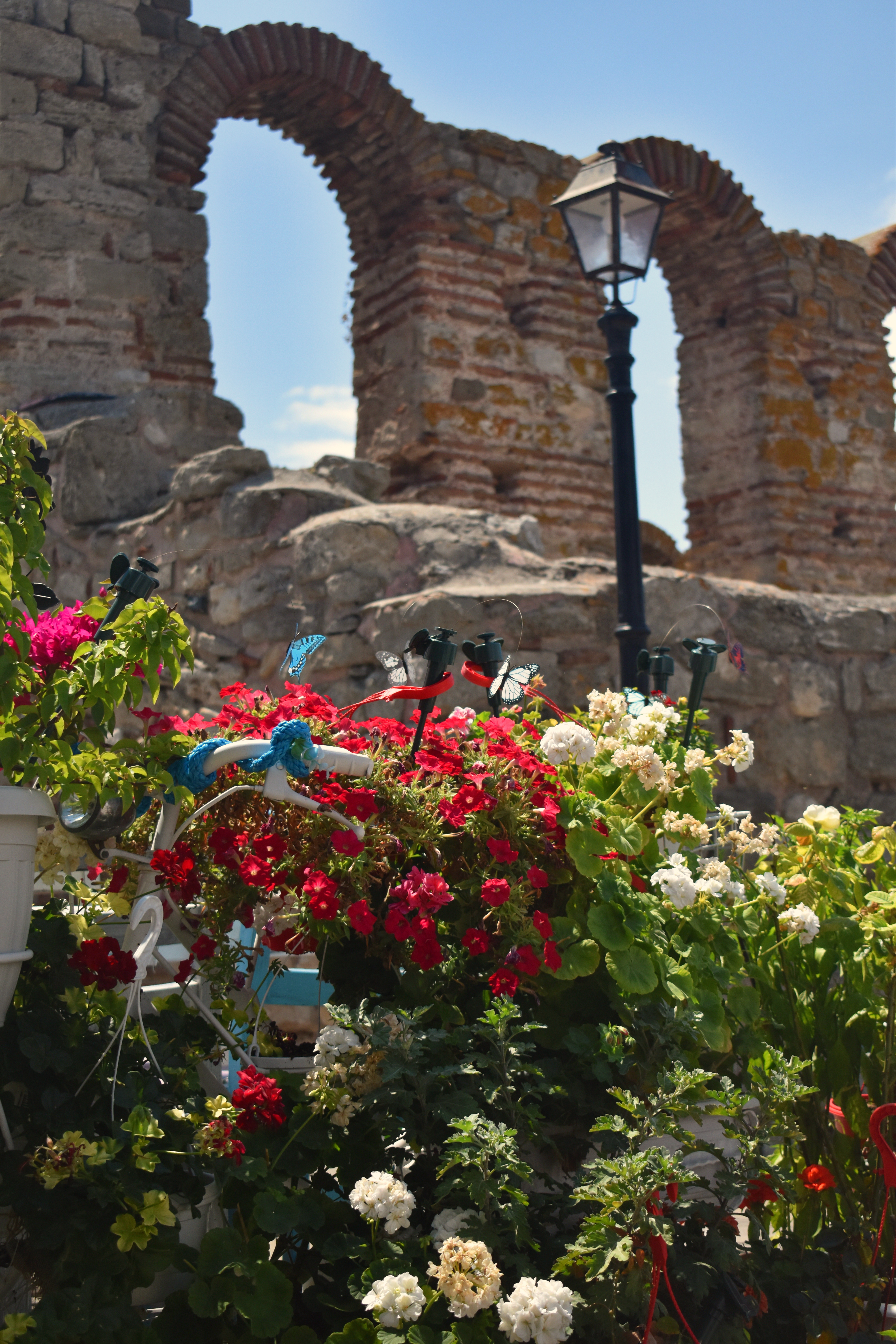
The cobblestoned streets are a warren of houses, shops and ruins, with visitors free to explore every side-street and hidden corner for well-kept secrets, sites and souvenir shops. The temperature sits at a steady 33°C, the midday sun holding firm. A tourist board installed raised planting bed and hanging baskets of flowers bloom in the afternoon light, vividly contrasting against the brick ruins of The Hagia Sophia Basilica, more commonly known as the Church Of Saint Sophia. Constructed between the late-5th and early-6th century, and remodelled in the 9th, this three-nave unvaulted basilica sits in the middle of the ancient city, now the “old quarter” of the town that forms part of this UNESCO World Heritage Site. Waves of visitors walk amongst history, standing for pictures and selfies in the footsteps of generations of tourists and worshipers before them, the new life of the flowers and guests against the weathered ruins of the past.
That evening, the temperature drops to 24°C as a thunderstorm takes hold, claps of thunder rolling through the coast and diagonal strands of lightning blast through the sky above Nesebar, the sky glowing pink in the light of the setting sun.
Only Happy Days.
~ A ~

Leave a Reply